
Read Nets and Anchors
The full vision paper, including contextual governance, the net-and-anchor language and learning from practice.
Open the paper
Library / Vision papers / Nets and Anchors
School-Based Community Leadership
How can school groups meet the distinct needs of each community they serve?
Strong school groups. Every school rooted in its community. A vision for leaders working with children, families and partners to make this possible.


Every school belongs to a place. The relationships, histories, strengths and aspirations around it shape the lives of its children. This paper asks how school groups can use their shared capacity while keeping each school connected to that place.
It offers a shared language for the tensions leaders manage, examples from different settings, and questions for school leaders, trustees and partners to discuss together.
School and school-group leaders, trustees, local governors and community partners. The paper includes English academy trusts and an international setting. Its ideas invite discussion and adaptation to your own context.
The full vision paper, including contextual governance, the net-and-anchor language and learning from practice.
Open the paper
A four-page introduction to the vision, its core ideas and what these ask of school and school-group leaders.
Open the executive summary
The lighter visual overview: a starting point for a conversation, separate from the four-page executive summary.
Open the visual overview
All nine full cases in one digital collection. Read how the work developed, the choices made and what leaders learned.
Open the case-study collectionThe net and anchors, five spheres of influence, three net shapes, the knot and the one-page overview. Copy the diagrams into your own presentations or use the slides as they are.
The diagrams and labels are editable, with the diagram components grouped for easy copying. Please keep the source credit and make any adaptations clear.
Download editable slides


Slide 1 of 8
Swipe through the visuals, or use the arrows.
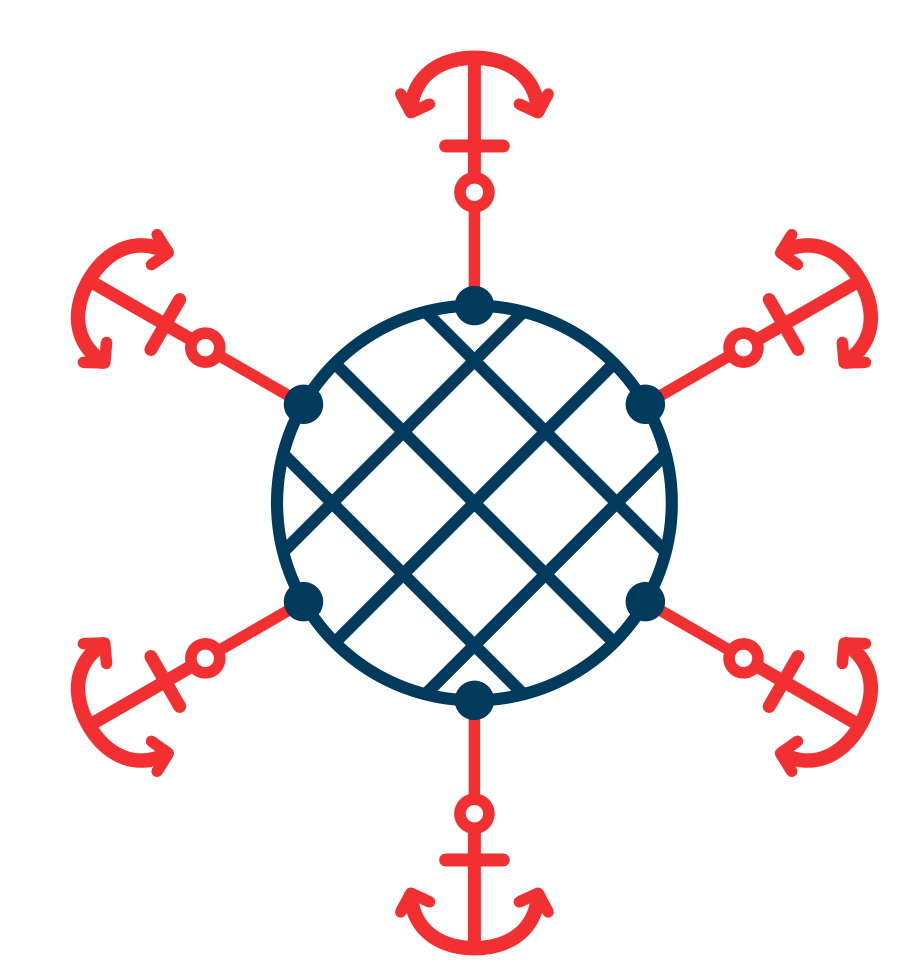
These ideas belong together. They are starting points for discussion, not numbered stages to work through.
Build a shared picture of each community through local information, lived experience and listening to children, families and partners.
Start with existing relationships and strengths. Work alongside other schools and services, including those beyond your own group.
Help local understanding reach the board. Consider how the group’s shape and boundaries affect whose voices inform its decisions.
Give this work time, roles, funding and opportunities to learn together so it can last beyond any one person.
Work with, not do to
Measure what matters
Choose collaboration over competition
Eight school settings and The Reach Foundation share their work. Explore each case in its own context, or download all nine full cases as a collection.
The images used in the paper and cases are AI-generated illustrations. They do not depict the named schools, families or case-study participants.


Recognised for its early years community work, St Chad’s chooses partnerships strategically and values collaboration with other local schools.
5 pages
Read this case study


Post-16 pathways and supported internships for young people in specialist schools and AP
6 pages
Read this case studySabrina Hobbs contributes her current work at Esteem alongside her earlier work as Headteacher at St Martins School, part of Shaw Education Trust. The supported-internship examples at Royal Derby Hospital and the University of Derby relate to St Martins. The Respect / EMCCA connections remain part of this account.


Careers as a trust-wide priority, supported by a regional careers hub
5 pages
Read this case study

Build trust with families from the very start, and create a dedicated, non-teaching role so the work doesn't fall on teachers' shoulders.
5 pages
Read this case study

A trust’s place-based strategy for understanding and tackling inequalities
7 pages
Read this case study

Partnership with the NHS: civic engagement as trust strategy
5 pages
Read this case study

A local curriculum with a global framework (International Baccalaureate) for applied “service” taking place within the community.
6 pages
Read this case study

A partner behind many of these stories
2 pages
Read this case studyThe Reach Foundation is a foundation supporting cradle-to-career work, rather than a school group. Its work connects several of these cases, including Maritime, and supports places to build a coherent journey for children from before birth into adulthood.


Collaborating in place by convening a neighbourhood delivery board
5 pages
Read this case studyCases 1 to 3 of 9
Scroll across to explore all nine cases.
The paper ends with an invitation to choose one issue that matters locally, explore it with children, families and partners, agree who will take it forward, and decide together how to know whether it is helping.
Use these questions with your team, governors or partners, alongside the examples and fuller discussion in the paper.
Choose a resourceExplore 31 annotated reading entries, organised by topic, alongside supporting sources.
Explore the reading and sourcesLead author: Tamara Zaple Rolfs FCCT. Contributing authors and working group: Julia Campbell-Ratcliffe, Jenna Crittenden FRSA, Sam Gibbs, Narinder Gill FCCT NPQEL, Aimée Tinkler FCCT.
Lead author · My Delta
Visit My Delta
Secondary School Principal · Strothoff International School

Head of Learning and Partnerships · CCE

Director of Professional Learning · Greater Manchester Education Trust

Director of Leadership and Transformation · DfE RISE Adviser

Director of Education · Odyssey Collaborative Trust

Editor · Executive Director, Work Collaborative
Zaple Rolfs, T., Campbell-Ratcliffe, J., Crittenden, J., Gibbs, S., Gill, N., & Tinkler, A. (2026). Nets and anchors: School-based community leadership. Work Collaborative.