The model

The Double Diamond change model

A simple, people-centred model for leading change in schools. Two diamonds, four moves and three checkpoints that help a school community understand a challenge together before trying to solve it.

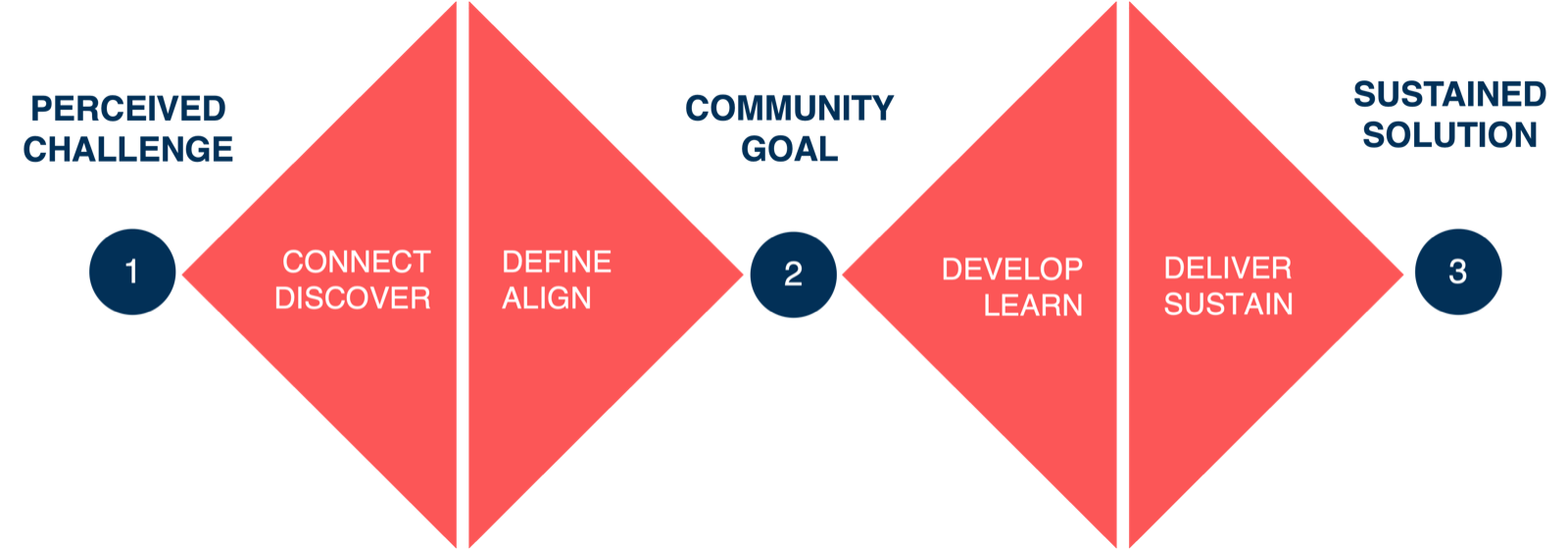
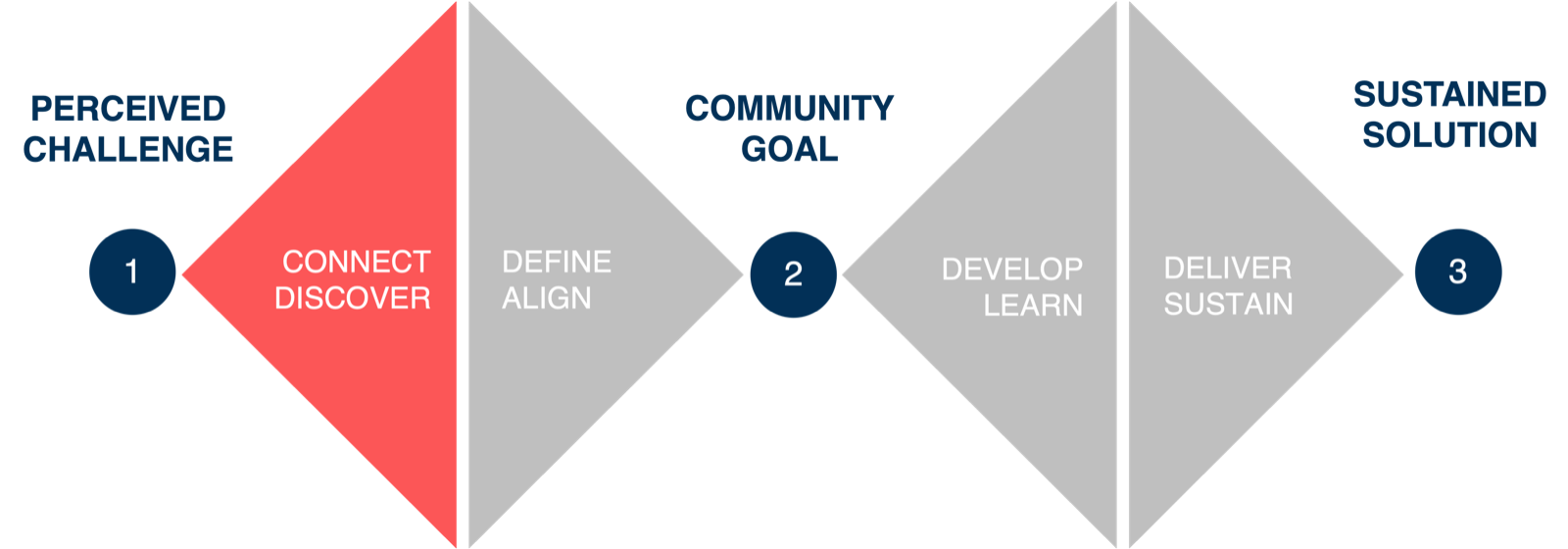
The Double Diamond change model: checkpoint 1 perceived challenge, then Connect and Discover, Define and Align, checkpoint 2 community goal, then Develop and Learn, Deliver and Sustain, checkpoint 3 sustained solution
What it is

Understand the problem before you solve it.

Most change in schools doesn't stick. Not because people don't care, but because we rush to solutions before we've understood the problem, and we move on before the new way of working has had time to settle. The Double Diamond slows that down.

The first diamond is about the challenge: open out to understand it from every angle, then narrow to a shared goal. The second is about the solution: open out to explore what's possible, then narrow to something you can deliver and sustain. Each diamond goes wide before it closes, so thinking gets room to breathe before decisions get made.

Community sits at the heart of it. This isn't a model to keep within the senior leadership team. It works when the people a change affects are part of shaping it.

Three checkpoints

Where you start, where you meet, where you land.

1

Perceived challenge

Where you begin, before you've looked properly. Often one person's view of what needs to change.

2

Community goal

The shared aim that closes the first diamond. A far stronger place to build from than one person's perceived challenge.

3

Sustained solution

The change, embedded in habits and culture, that closes the second diamond.

Four moves

Two diamonds, one move at a time.

Each move pairs two stages that overlap and happen together, rather than one after the other.

The model with Connect and Discover highlighted
Move 1 · Diamond 1, opening out

Connect & Discover

Build the trust that lets people speak openly, then explore the challenge from every angle before deciding what it really is.

"What is the real challenge here, and what would happen if we did nothing?"
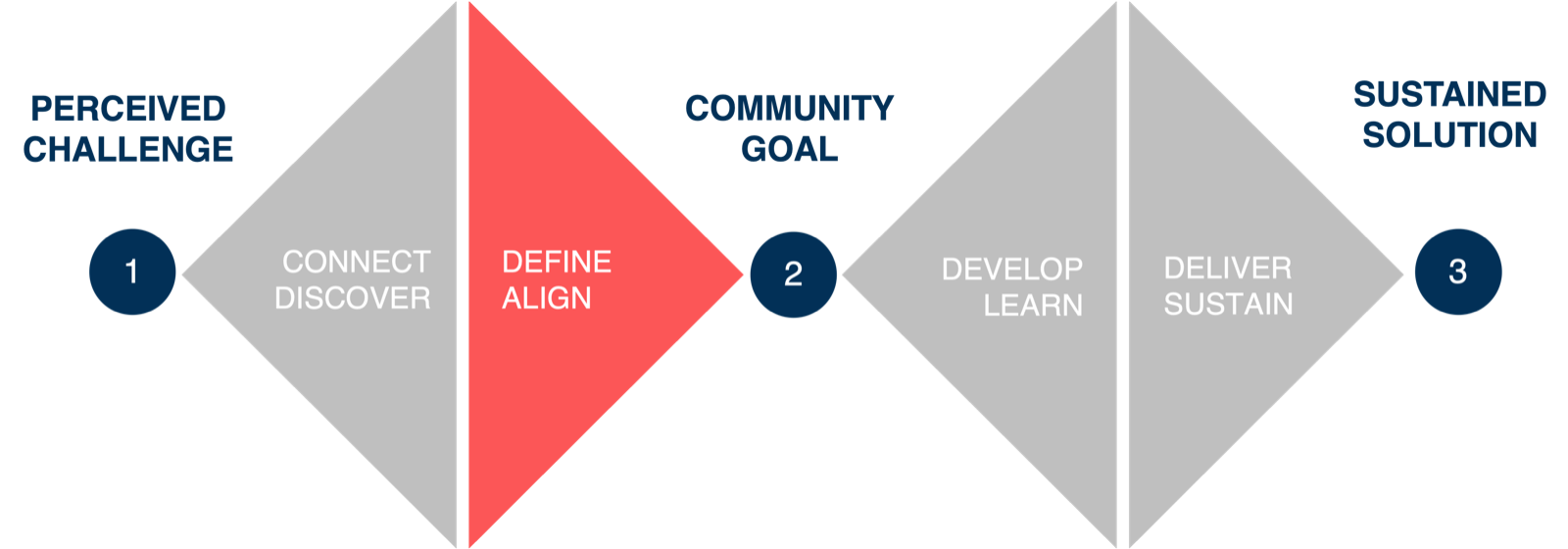
The model with Define and Align highlighted
Move 2 · Diamond 1, narrowing in

Define & Align

Pull what you've found into one clear challenge, then build the shared ownership that turns it into a community goal.

"If we could solve only one challenge, what would it be?"

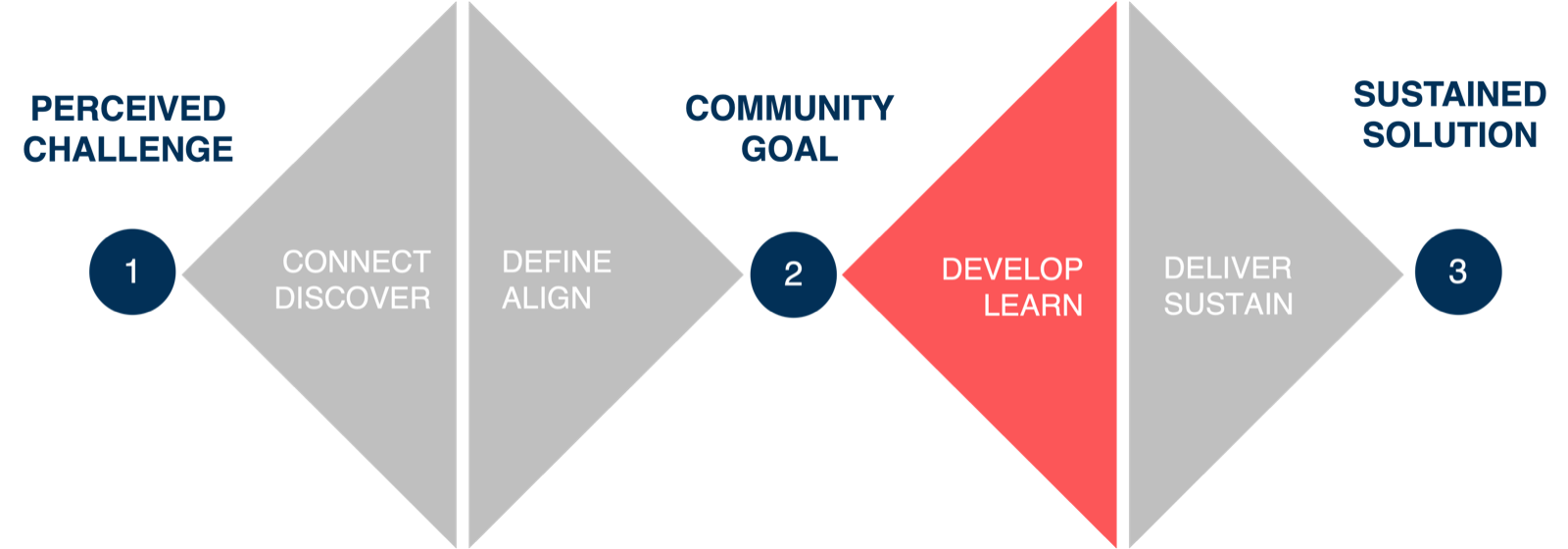
The model with Develop and Learn highlighted
Move 3 · Diamond 2, opening out

Develop & Learn

Explore a wide range of possible solutions, not just the obvious one, then build the knowledge and confidence to choose well.

"What do we already have in the pantry?"

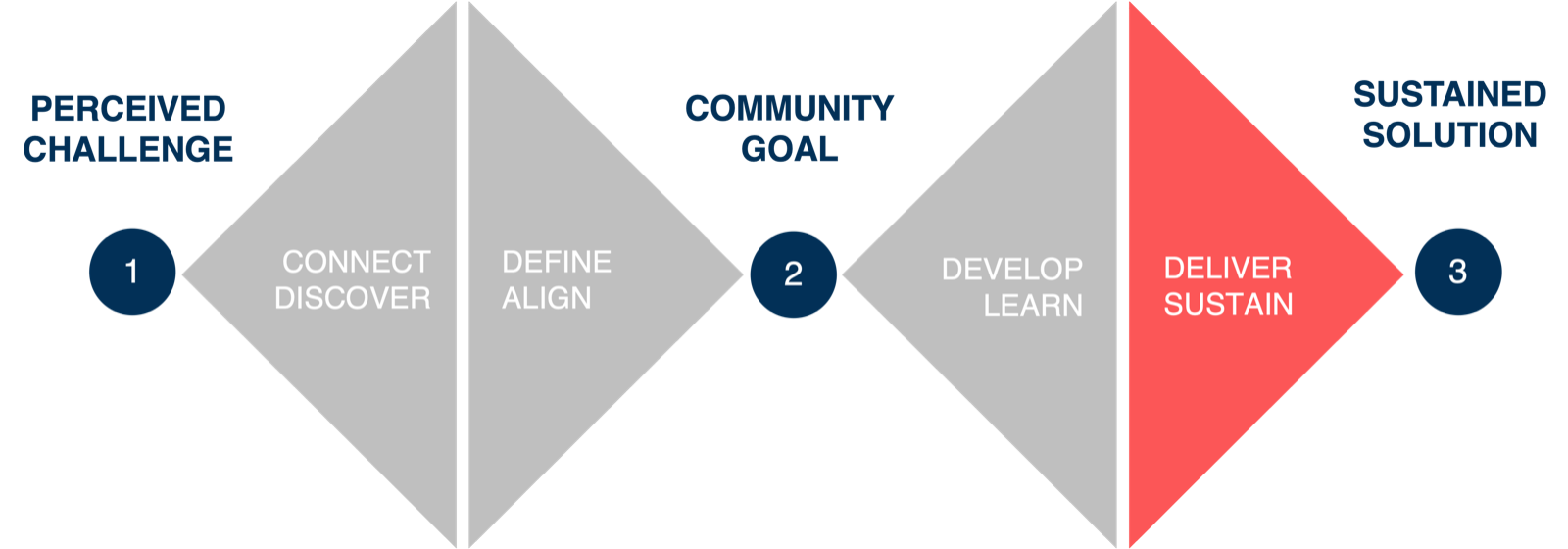
The model with Deliver and Sustain highlighted
Move 4 · Diamond 2, narrowing in

Deliver & Sustain

Commit to one solution, deliver it well, then build the habits and routines that keep it alive.

"In two years this change is gone. Why? In five years it's still going. Why?"

The book sets out five questions for each of the eight stages: 40 in all, each with the thinking and research behind it.

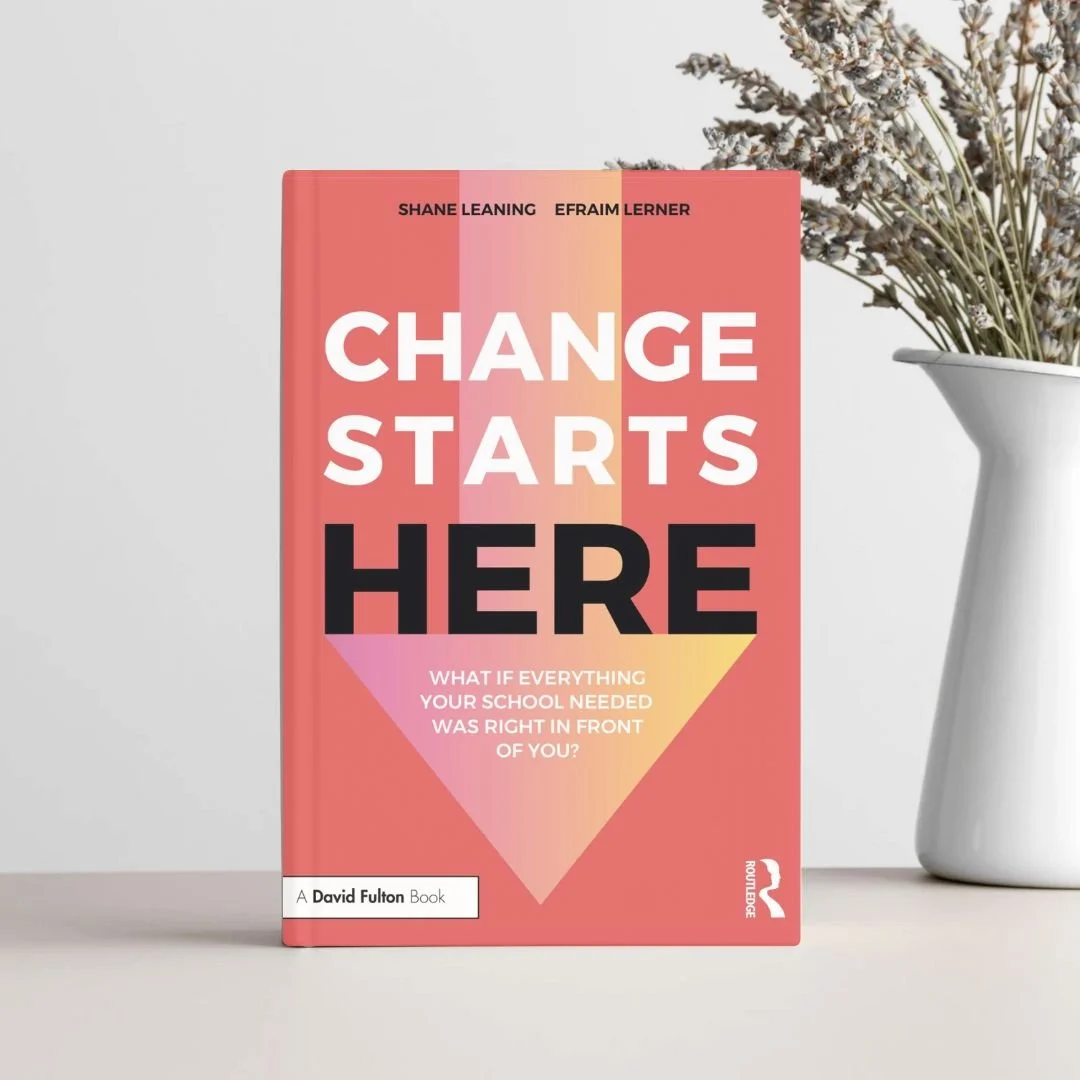
Change Starts Here by Shane Leaning and Efraim Lerner
Where it comes from

Borrowed from design, rebuilt for people.

The original Double Diamond comes from the Design Council, which created it as a simple way to describe the design process: discover, define, develop, deliver.

Shane Leaning and Efraim Lerner came across it through a chance conversation in a Shanghai coffee shop, and saw how well it could hold the questions that matter in school change. But schools aren't products. They're communities of people, and people are wonderfully complex. So they adapted it, adding the human work that change in schools depends on: connecting, aligning, learning and sustaining.

The result is the model at the heart of their book, Change Starts Here (Routledge, 2025), and of everything Work Collaborative does. In the open-source spirit of the original, it's free to use, adapt and build on. All we ask is that you share what you learn.

How to use it

A guide, not an instruction manual.

The model matters less than the questions it helps you ask. Use it to structure better conversations with your community, not as a checklist to follow to the letter.

  1. 01
    Start with a real challenge. Pick one change you're facing. If it's your first time, choose something small and see where it takes you.
  2. 02
    Bring people with you. Work through the questions together, with the people the change affects. It won't work as a senior-leadership-only exercise.
  3. 03
    Start where you are. You may already be partway through a change. Find where the challenge is showing up on the diamond and begin there.
  4. 04
    Let your context set the pace. The stages aren't equal. Low trust means the first diamond will take longer; a deep shift in "the way things work around here" means the second will.
  5. 05
    Come back round. It's a cycle. The real success is a community more willing and able to start the process again next time. The work is never done.
Put it to work

Ways to use the model.

Free

The workbook

A practical companion that takes you through all four moves, one at a time, using your own school and your own challenge.

Get the free workbook →

Read

The book

Change Starts Here sets out all 40 questions, with the stories and research behind them.

Get the book

Learn

The course

The Foundation Certificate in Resonant School Change takes you through the model with a cohort of leaders and support along the way.

See the course

#ChangeStartsHere

Try it on a real challenge.

The free Double Diamond Change Workbook takes you through all four moves, using your own school and your own challenge.